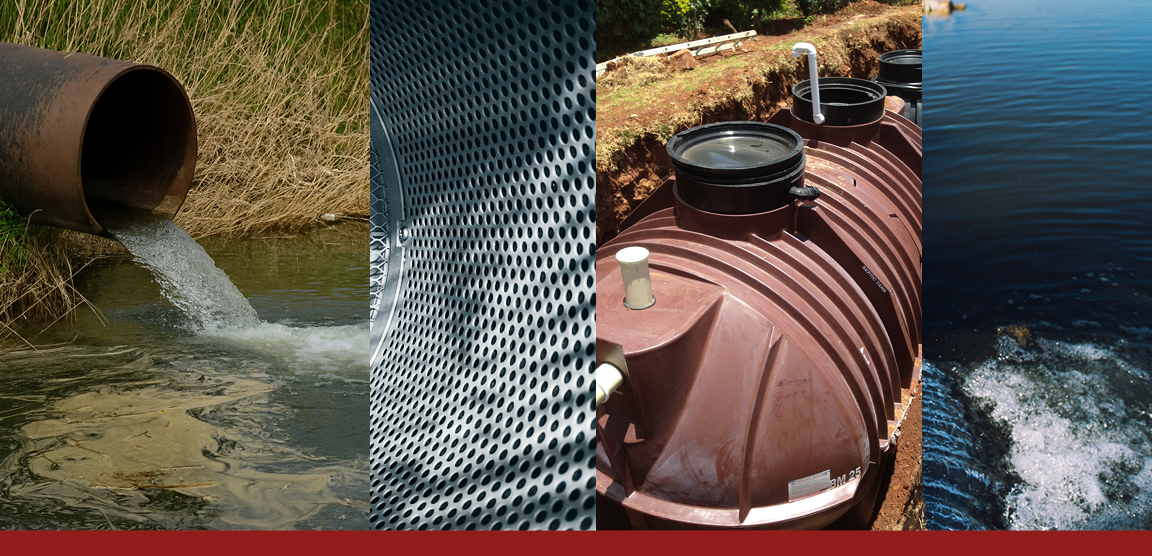
Access to clean water is considered a fundamental human right. Safeguarding public health and the environment depends on effective wastewater treatment.
That’s why it’s so concerning that over 50% of South Africa’s wastewater treatment works (WWTPs) are failing.
No fewer than 334 (39%) out of 850 are actually in a critical state. On top of this, there’s a staggering estimated backlog of approximately R332 billion in municipal wastewater infrastructure. And with sewage treatment plants failing, large volumes of effluent are being released into the environment. This contamination poses serious health risks, including antibiotic resistance and infertility.
Understanding domestic and industrial wastewater treatment is crucial to addressing these challenges. Though terminology varies, wastewater treatment plants essentially follow the following key wastewater treatment stages: preliminary, primary, secondary and tertiary.
Each stage plays a vital role in turning hazardous wastewater into a usable resource. Calcamite’s innovative wastewater treatment solutions support each stage of this vital process. Here’s a closer look at the basic principles of wastewater treatment:
Prescreening
The first unit process generally encountered in wastewater treatment plants is screening. The purpose is to remove course material that could block sunsequent process equipment. It is done by the use of various size screens.
Primary Treatment
PRIMARY TREATMENT (SEPTIC TANK)
Sewage can gravitate or be pumped into the septic tank where the flow is retained at a minimum hydraulic retention which depends on the influent parameters and the required effluent standards . During this retention, the solids concentration will separate from the liquids. The lighter solids such as soap, scum, and fats will float to the top of the tank to form a scum layer. Heavier solids will settle to the bottom of the tank and form a sludge layer. The sludge will partially decompose under anaerobic conditions.
Hydraulic displacement by the inflow creates settled sewage to be discharged from the outlet of the septic tank. The Calcamite outlet configuration is developed to ensure that floating scum and settled sludge is not drawn from the tank, ensuring effective primary phase separation of the incoming raw sewage.
Flow equalisation
The equalization of peak flows through the plants is very important in small-scale plants to maintain treatment effectiveness. Peak flows are more pronounced in smaller plants as small communities generally have the same routines.
Peak flows can be daily, which means up to 50% of the flow can occur within a few hours, or seasonal, where the plant must treat more sewage due to more people using the system.
Therefore, in addition to adequate retention time in the septic tanks, Calcamite provides an equalization tank whose function is to absorb any potential peak flows that will occur before the bioreactors and ensure the correct retention times. It is generally sized to absorb daily peak flows, where the entire plant is sized to treat the maximum seasonal flow.
SECONDARY Biological Treatment (Bio-reactor)
Biological treatment of the settled sewage from the septic tank is achieved in the Bioreactor. The Bioreactor is packed with selected fixed film media which promotes biofilm proliferation (the process whereby microorganisms attach to and grow on the surface of the media) while also allowing wastewater to flow through the system. The microbial communities in the biofilm feed on the organic material and other nutrients in the wastewater. Oxygen is provided to the aerobic bacteria biofilms on the media using selected pumps and diffusers. The system is sized and designed to maintain oxygen at optimum levels in the bioreactor whereafter the treated effluent will overflow into the secondary settling tank.
The selected plastic media also provides adequate space between its surfaces for an adequate passageway for the dissolved oxygen to pass the biofilm, ensuring that the attached growth can absorb the oxygen and utilize it for their growth as they consume the organic and inorganic compounds in the wastewater.
Final Settlement (Clarifier)
The secondary treated wastewater stream is gravity fed into a clarifier settling tank which is designed to separate the remaining suspended solids from the liquid. This is achieved by reducing the velocity of the flowing treated effluent from the bioreactor to allow suspended particles of higher specific gravity to separate from the main body of the liquid and settle on the floor of the tank as humus sludge. The suspended solids include excess bacterial slimes which are sloughed off the media in the bioreactor due to growth. This produced sludge is returned to the primary treatment tank (septic tank) to enhance the performance of the anaerobic process.
Options for disinfection
Disinfection is the final step in the treatment process. Calcamite recommends Chlorine dosing units for disinfection. The contact tanks are designed to provide adequate contact time after dosing to eliminate all potential disease-forming micro-organisms. The treated effluent is then pumped out using a submersible pump. This effluent can be stored for non-potable reuse, used for irrigation purposes, or disposed of per local regulations into the environment.
ADVANCE nutrient removal
Denitrification is difficult in all sewage plants, not only in small plants, as the bacteria responsible for denitrification requires a substantial amount of readily available biodegradable carbon, and they are slow growing and sensitive to changes in temperature and PH. The need for biological augmentation will be determined during operation, if the TKN/COD ratio is > 0.1.
SLUDGE MANAGEMENT
How to manage sludge is an important operational decision that must be incorporated in the design. The amount of sludge that is likely to be generated in the treatment process is calculated from a mass balance calculation based on the influent and effluent parameters.
Several strategies can be implemented for sludge disposal. Surplus accumulating settled sludge can be removed periodically as determined by the design, by some form of an external pump or mobile tanker service. This sludge is typically transferred to a larger municipal wastewater plant with dedicated sludge handling processes.
Alternatively the sludge can be treated and reused on site, by dewatering, stabilization, bulking and composting.
Supporting Every Stage of Wastewater Recycling
It’s clear that South Africa faces major wastewater treatment challenges. Solving them means investing in the right technology at every stage of the process, from preliminary screening to advanced tertiary treatment. Calcamite’s wastewater treatment plants are designed to support each of these stages, helping to improve efficiency, reduce environmental impact, and ensure long-term compliance.
Want to learn more about the treatment process? Explore the basic principles of wastewater treatment here, or see how our wastewater treatment plant solutions can support your project.