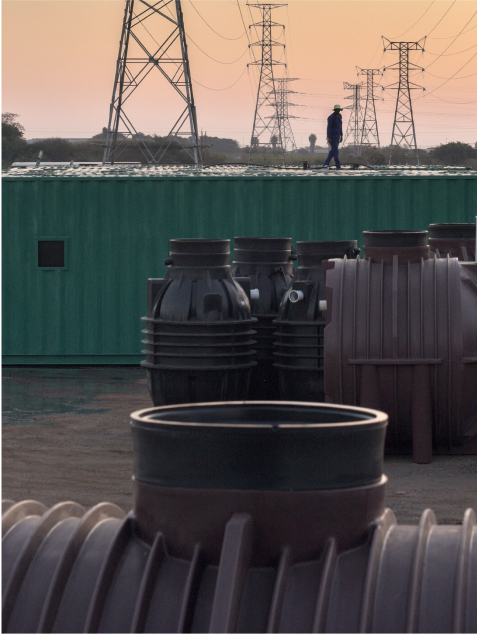


Small-scale on-site wastewater treatment plants are often required where there is no municipal sewage connection available and where an acceptable effluent standard is required for water reuse for irrigation, toilet flushing, dust suppression, and other non-potable uses.
The maintenance requirements of wastewater treatment plants are directly related to the size of the plant and the volume of sewage treated daily. Small-scale household plants are not onerous to maintain and require less maintenance than a swimming pool. Larger plants with higher daily flows require more regular maintenance intervals and preferably constant remote monitoring and control.
Maintenance Plans and Services Are a Legal Requirement
Maintenance plans and services are a requirement of the Department of Water & Sanitation.
A maintenance plan for all sewage plants is a mandatory requirement from the Department of Water & Sanitation in accordance with section 23(1) of the Compulsory National Water and Sanitation Services Standards, in terms of section 9(1) of the Water Services Act (Act No. 108 of 1997).
Most Calcamite plants designed to comply with the irrigation effluent standards of the National Water Act can be classified as Work Class D plants. A Class V Professional Process Controller is required to oversee the plant, although they do not need to be on-site full time.
Operating Manuals, Monitoring, and Preventative Maintenance
Small-scale wastewater treatment plants for households are supplied and installed with an operating manual and maintenance plan provided to the client.
Remote monitoring, control systems, and maintenance contracts are preferable for wastewater treatment plants with a capacity greater than 20 m³/day, particularly where multiple air blowers and pumps are installed. This ensures constant monitoring of mechanical and electrical equipment, as well as flow and flow variations, making preventative maintenance possible.
Simple Steps to Reduce Maintenance Requirements
Maintenance and operation of the plant are significantly improved if the client follows these simple steps.
Manage What Is Disposed of in the Sewer
Maintenance will be significantly reduced if the disposal of non-biodegradable and toxic materials into the sewer is avoided.
The general rule is that sewer systems are designed for the three Ps only: pee, poo, and paper (toilet paper). All other waste, particularly non-biodegradable items, should be disposed of in the trash or a designated hazardous waste facility. Failure to do so can contribute to system blockages and environmental contamination, as explained in the effects of sewage pollution on the environment.
This includes:
- Personal hygiene products such as wipes, diapers, sanitary products, earbuds, cotton wool, dental floss, hair, bandages, and condoms
- Kitchen waste including oil, fat, solid food scraps, coffee grounds, eggshells, fruit pits, and general food waste
- Plastics and metals such as plastic bags, bottles, aluminium cans, glass, and polystyrene
- Chemicals and paint, including motor oil, antifreeze, brake fluid, paints, solvents, pesticides, and strong household cleaners such as bleach
- Medications, which should be returned to a pharmacy or approved drop-off site for safe disposal
Use Bacteria- and Human-Friendly Cleaning Materials
The most suitable household cleaners for sewage treatment systems are biodegradable, water-soluble cleaners with a neutral pH. These products are typically labelled as non-hazardous and suitable for septic tank systems.
pH-neutral washing powders, shampoos, and body soaps are also more suitable for babies, children, and adults with sensitive skin or allergies, while supporting healthy biological treatment processes used in septic and on-site wastewater systems.
Check That Mechanical Equipment Is Operating Correctly
The mechanical equipment in a wastewater treatment plant consists primarily of pumps and air blowers. Pumps are responsible for sewage transfer and discharge, while air blowers supply oxygen to the bacteria within the bioreactor.
If this equipment remains in good working order, the plant will function as designed. Mechanical equipment should be serviced at six-monthly intervals by the Calcamite maintenance team. For larger plants, remote monitoring and a formal maintenance plan are strongly recommended to support continuous performance monitoring and preventative maintenance of wastewater treatment components and systems.
Top Up Disinfection Systems
If the plant uses chlorine as a disinfectant, chlorine tablets must be topped up regularly to ensure effective pathogen control and compliance with irrigation effluent standards.
Periodic Desludging
Sludge is a natural by-product of sewage treatment, and no sewage system is completely sludge-free. Small-scale on-site wastewater treatment plants generate less sludge than conventional sewage systems due to longer sludge retention times and smaller flows.
However, sludge will accumulate over time and periodic desludging will be required. Larger systems will require desludging more frequently than smaller systems.
Final Considerations
On-site small-scale wastewater treatment plants require lower capital and operational costs than conventional sewage systems, and maintenance demands are reduced due to lower treatment volumes.
However, just like any other biological, chemical, electrical or mechanical systems, these plants are not maintenance-free. Correct operation, responsible usage, and adherence to maintenance requirements are essential to ensure optimal performance and long-term compliance. For tailored advice, monitoring solutions, or maintenance support, you can contact the Calcamite team for expert guidance.